Wellness
How Massage Supports Your Body's Natural Recovery

In this article
Massage is one of the oldest therapeutic practices in human history, and yet it is one of the most consistently undervalued in the context of a modern health and wellness plan. It is easy to think of it as a luxury — pleasant but peripheral, something you might book for a special occasion rather than something that earns a consistent place in how you maintain your health.
The clinical picture is different. Massage has well-documented effects on cortisol, circulation, lymphatic function, and muscle recovery that make it a physiologically sound investment in long-term wellbeing — and, as it relates to skin health, a relevant one.
What Massage Does to the Body
The most studied mechanism is the effect on the autonomic nervous system. A well-delivered massage session moves the body from sympathetic dominance — the fight-or-flight state associated with stress — toward parasympathetic activity, the rest-and-digest state in which the body repairs, recovers, and restores.
Research consistently shows that massage reduces circulating cortisol while increasing serotonin and dopamine. These are not minor changes. Sustained cortisol elevation is associated with collagen breakdown, immune suppression, disrupted sleep, and increased inflammation. A reliable intervention that reduces it has real physiological value.
Massage also improves local circulation. Increased blood flow to muscles and soft tissue delivers oxygen and removes metabolic waste more efficiently. This is part of why massage is used in athletic recovery — it reduces delayed-onset muscle soreness and supports the clearance of the inflammatory by-products that accumulate after intense physical effort.
Lymphatic drainage is a further mechanism worth understanding. The lymphatic system is responsible for clearing fluid, immune cells, and cellular debris from tissue. Unlike the cardiovascular system, it has no pump — it relies on movement, muscle contraction, and external pressure to function. Massage, particularly techniques that follow lymphatic pathways, supports this clearance process. For clients who experience persistent facial puffiness or congestion, improving lymphatic flow is often a productive part of the approach.
The Skin Health Connection
Elevated cortisol accelerates collagen degradation through the activation of matrix metalloproteinases — enzymes that break down the structural proteins in the dermis. A massage practice that consistently reduces cortisol levels is, in that sense, a meaningful contribution to skin quality over time.
Improved circulation from regular massage brings more nutrient-rich blood to the skin's supporting tissue. The fibroblasts that produce collagen are metabolically active cells that respond to adequate oxygen and nutrition. Supporting circulation is supporting the environment in which collagen production occurs.
For clients undergoing regenerative treatments at REGEN — PRP, polynucleotides, microneedling — the recovery environment matters. A body that is chronically inflamed, cortisol-elevated, or circulating poorly will be slower to heal and slower to produce the collagen response these treatments are designed to stimulate. Massage, as a regular part of the wider plan, creates a more favourable recovery environment.
The REGEN Massage Menu
At REGEN Clinic, our massage services are designed as genuine therapeutic interventions, not as a quiet room and a towel. We offer a range of treatments to address different needs.
The REGEN Deep Release Massage (Deep Tissue) — available as a full-body 60-minute treatment at £95, or as a back and neck focus at 30 minutes for £65 — addresses deep muscular tension using sustained pressure and specific technique. It is particularly suited to clients with chronic postural tension, stress-related tightness in the neck and upper back, or those whose physical work demands sustained muscular effort.
The REGEN Serenity Massage (Swedish) — 60 minutes at £85, or 30 minutes at £55 — uses flowing, rhythmic technique to promote whole-body relaxation and circulation. It is the most accessible entry point for clients new to massage therapy, and one of the most effective for nervous system recovery.
The REGEN Hot Stone Melt (40 minutes, £70) uses heated volcanic stones to extend the penetrating warmth of massage into the deeper muscle layers, reducing tension more efficiently than pressure alone. It is a particularly good option for clients who find deep tissue technique uncomfortable.
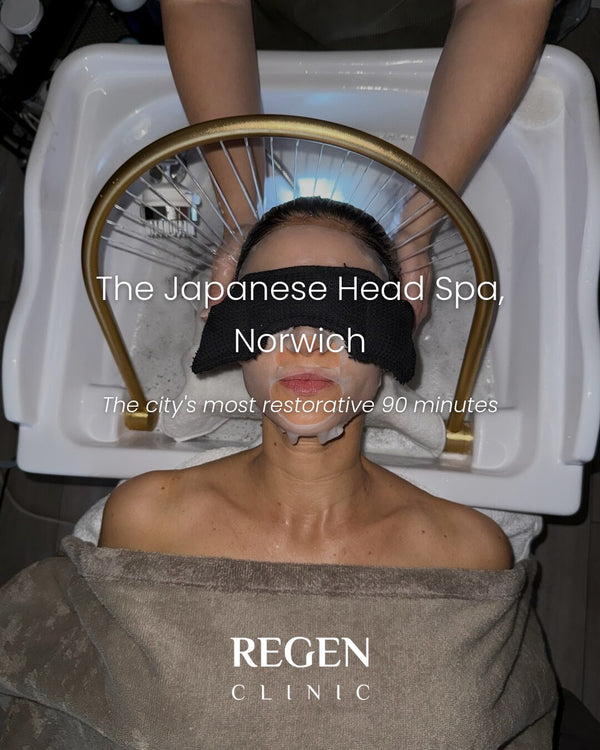
The Head, Neck and Shoulder Massage (45 minutes, £65) focuses on the area where most people carry the greatest accumulation of stress-related tension — an ideal complement to the Japanese Head Spa or as a standalone treatment for clients who carry strain in the upper body.
For expectant clients, the REGEN Nurture Massage — available as a full-body session at 60 minutes (£90) or back and neck focus at 30 minutes (£60) — is adapted for pregnancy, addressing the specific discomforts of each trimester with appropriate positioning and technique.
Integrating Massage into a Wider Wellness Plan
The question is not whether massage has value — the evidence for that is clear. The question is how to integrate it intelligently, rather than booking reactively when stress becomes overwhelming.
Monthly or fortnightly massage, positioned as a consistent input to nervous system health and recovery rather than a crisis intervention, produces cumulatively better results. The body responds to regularity. A nervous system that has consistent parasympathetic support is a different physiological environment to one that receives it once every six months.
At REGEN, we are happy to discuss how massage services fit into a broader plan that may also include skin treatments, homecare, and regular reviews. Skin health and nervous system health are not separate categories — they are part of the same picture, and we approach them that way.
Book a massage at REGEN Clinic via theregenclinic.com.
Read further, or actually do something about it.
If anything in this piece sounds like your skin, the next step is a Reveal Consultation. A 60-minute doctor-led skin assessment, a documented plan, and where appropriate the first treatment in the same visit.