Wellness
Holistic Skin Health: Why What Happens Outside the Clinic Matters

In this article
Skin health is not a product category. It is not something you can buy your way to entirely, nor something that happens solely in a treatment room. The skin is a living organ, and like every other organ in the body, it is shaped by the full context of how you live — what you eat, how much you move, how well you sleep, how much stress you carry, and how consistently you protect it from the forces that work against it.
This is not an argument against skincare products or in-clinic treatment. Both are important. It is an argument that they work best when the foundations they are built on are sound.
The Inputs That Drive Skin Quality
Nutrition
The skin needs raw materials to produce collagen, maintain the barrier, and regulate inflammation. Several nutrients are particularly relevant.
Vitamin C is not just a brightening ingredient in serums — it is an essential cofactor in collagen synthesis. Without adequate dietary Vitamin C, the body cannot produce collagen properly. Zinc plays a role in wound healing and inflammation regulation. Omega-3 fatty acids — found in oily fish, flaxseed, and walnuts — support the lipid-rich structure of the skin barrier and help regulate the inflammatory signalling that drives redness, acne, and accelerated ageing.
Sugar and refined carbohydrates deserve mention here because of their role in glycation — a process in which sugar molecules bond to collagen and elastin fibres, making them stiff and less functional. This is a direct biochemical mechanism by which a high-sugar diet accelerates visible skin ageing. It is not moralistic — it is physiological.
A diet that emphasises whole foods, adequate protein, antioxidant-rich vegetables, and healthy fats is not a special protocol for skin health. It is a diet that supports the functioning of every organ in the body. The skin reflects it.
Hydration
The skin's water content is tightly regulated, but systemic dehydration puts pressure on that regulation. Transepidermal water loss is the rate at which moisture evaporates through the skin's outer layer — a healthy barrier manages this efficiently, but a dehydrated body and a compromised barrier compound each other. Consistent, adequate hydration is a small but genuine contribution to skin plumpness, barrier function, and the appearance of fine lines.
This does not require large volumes. Most adults need around 1.5 to 2 litres of fluid per day from all sources. The quality of hydration matters more than dramatic increases in quantity.
Exercise
Regular moderate exercise improves skin health through several mechanisms. It increases peripheral circulation, delivering more oxygen and nutrients to skin cells and supporting the clearance of metabolic waste. It reduces systemic inflammation when performed consistently and at appropriate intensity. And — importantly — it is one of the most reliable interventions available for reducing cortisol and improving sleep quality.
There is also evidence that aerobic exercise supports mitochondrial function in skin cells, which matters for the energy-dependent processes of repair and renewal. Skin that is well-oxygenated and metabolically active is skin that responds better to treatment.
Sleep
We have written about this in more detail elsewhere, but the short version is this: the skin does a significant proportion of its repair and collagen synthesis during sleep. Poor sleep quality is not cosmetically neutral — it is a measurable contributor to accelerated skin ageing, barrier compromise, and reduced responsiveness to treatment. It is worth taking seriously.
Stress and the Nervous System
Chronic stress elevates cortisol. Elevated cortisol breaks down collagen, compromises the skin barrier, drives inflammation, and reduces the quality of sleep. The mechanisms are well-established, and the clinical consequence is visible: clients under sustained stress often age faster than their habits would predict, and often heal more slowly from treatment.
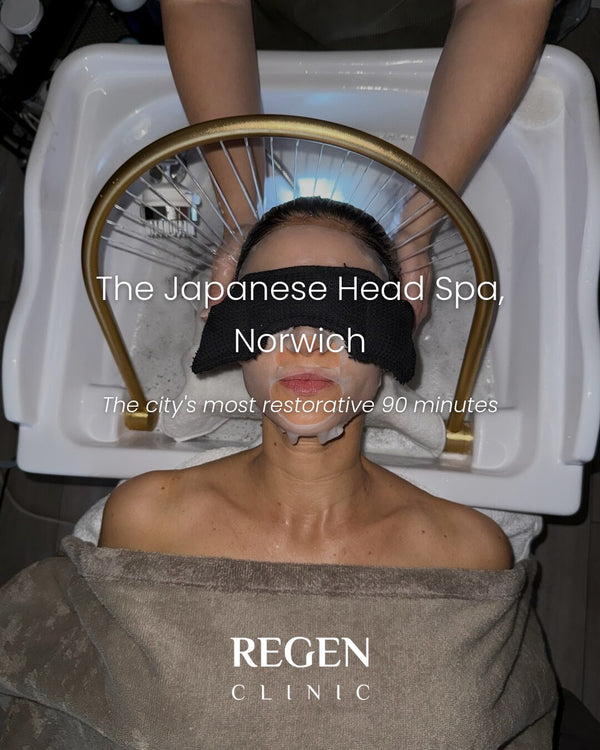
Managing stress is not a soft recommendation. It is a clinically relevant input into skin health. Exercise, adequate sleep, social connection, time in nature, and — within our own offering — massage therapy and Japanese Head Spa treatments are all legitimate, physiologically meaningful ways of reducing the cortisol burden that otherwise falls onto the skin.
Where In-Clinic Treatment Fits
None of the above replaces in-clinic treatment. Corrective procedures, prescribed skincare, and clinical oversight do things that lifestyle alone cannot. Collagen induction, pigmentation correction, skin quality improvement through PRP or polynucleotides — these are the active interventions that produce measurable change.
But they work in a context. A client who supports their skin well outside the clinic will see more from every treatment they receive inside it. A prescribed skincare regime delivered consistently, a sleep pattern that allows for overnight repair, a nutrition approach that provides the raw materials for collagen synthesis — these are the foundations that make clinical treatment more effective, and that preserve the results once treatment is complete.
The REGEN Approach
At REGEN Clinic, we take a whole-person view of skin health. During the Reveal consultation, Dr Chris assesses not just the skin itself, but the context around it — lifestyle factors, stress levels, sleep quality, any concerns about nutrition or hydration, and how these may be affecting what we observe clinically. The treatment plan that follows is built on that complete picture, not just on what is visible at the surface.
Skincare and treatments are most powerful when they are supported by a foundation that the clinic alone cannot build for you. Our role is to help you understand that foundation and to work within it as intelligently as possible.
Book a Reveal Consultation at theregenclinic.com and start with the full picture.
Read further, or actually do something about it.
If anything in this piece sounds like your skin, the next step is a Reveal Consultation. A 60-minute doctor-led skin assessment, a documented plan, and where appropriate the first treatment in the same visit.