Skincare
Why skin dries out indoors in winter, and the routine changes that actually help

In this article
Every October, within a fortnight of the heating coming on, the same message arrives in my clinic: "My skin has suddenly gone tight and flaky, and nothing I use feels right any more." The products have not changed. The air has.
Your winter skincare routine does not need more steps. It needs a different set of priorities, which is mostly about taking things away and protecting what the skin is already trying to do. This is the Elevate pillar of the REGEN Method at its most practical, in Norwich and in London.
Why skin dries out indoors in winter
Skin dries out in winter because the air around it holds less moisture, and the outer layer of the skin loses water to that air faster than it can replace it.
Cold air outdoors is low in humidity. Central heating then dries indoor air further, so you move between two dry environments all day. Hot showers, radiators and long days in warm offices do the rest, because heat strips the skin's natural oils and raises water loss through the surface.
The barrier is the outermost layer of skin, made of cells bound together by fats such as ceramides. When it is intact, it holds water in and keeps irritants out. When water loss outpaces repair, skin feels tight, looks dull, flakes, and starts to sting with products it tolerated in August.
Dial down before you add
When skin turns sensitive, the instinct is to add something richer. I usually start by subtracting.
Scrubs, cleansing brushes, foaming cleansers and frequent exfoliating acids all compound the dryness, so these are the first things to simplify.
The same applies to anything that stings on application. If a product that used to feel comfortable now burns, the skin is telling you the barrier is compromised. Our guide to what happens when you over-exfoliate explains how to recognise it and recover. ## Winter is retinoid season
Autumn and winter are the best months to start or build up a retinoid. Sun exposure is lower, which makes it easier to protect the skin while it adapts, and retinoids are central to long-term skin quality, texture and collagen support. Dry winter skin is not a reason to abandon one.
What changes is how the regime is built around it. If your skin becomes sensitive or starts to flake, we adjust the surrounding routine first: a gentler cleanser, a ceramide-rich moisturiser, buffering the retinoid with moisturiser, and spacing applications while the skin settles. If you use a high-strength or doctor-only retinoid, our guide to using retinols covers how to introduce and adjust it safely.
What a good winter skincare routine contains
Keep it short and consistent.
Cleanse with a gentle, non-foaming cleanser and lukewarm water. Hot water feels comforting and does more harm than most products.
Apply a hydrating serum to slightly damp skin. Ingredients that draw water in, such as hyaluronic acid and glycerin, work best when they are sealed in afterwards.
Follow with a moisturiser containing ceramides and other barrier lipids. In the evening, a richer texture is often worthwhile. If your skin is very dry, a thin layer of an occlusive balm over the top slows water loss overnight.
In the morning, finish with a broad-spectrum sunscreen. Winter sun is lower but ultraviolet light still reaches you, and a compromised barrier is more reactive to it. Our guide to using SPF every day covers the detail.
If you want to understand why a clinical-grade moisturiser or serum differs from a high-street one, what "medical-grade" actually means sets it out, and the skincare ladder shows how products are built up in a sensible order.
The small things that make a larger difference
Lower the shower temperature and keep showers short. Moisturise within a few minutes of washing, while the skin is still slightly damp. Drink water, though I would not oversell this: hydration from within helps, but it does not replace a working barrier.
Lips and hands deserve attention too. They have fewer oil glands than the face and show winter dryness first. A bedside balm and a hand cream you actually keep near the sink do more than any occasional treatment.
A humidifier in the bedroom can help if the heating runs overnight, particularly for people prone to eczema or rosacea. It is a modest measure, not a cure, but many patients notice the skin feels less tight on waking.
Norwich's wind and London's commuter heating swing both punish skin in different ways. In Norwich the damage tends to be outdoor wind followed by a heated shop or office; in London, long hours of dry, recirculated air. The principle is the same in both: protect the barrier, then treat.
When dryness is a sign of something else
Winter often unmasks skin conditions that were quietly present all year. Persistent redness and flushing can be rosacea, and our piece on calming rosacea without stripping the barrier explains what to look for. Itchy, scaly patches may be eczema or contact dermatitis. These need assessment rather than a stronger moisturiser.
Dryness can also reflect long-term skin quality and hydration. Where the skin stays dull and thin despite good homecare, regenerative treatments such as Profhilo can be discussed at a consultation. They are never a substitute for protecting the barrier first, and suitability depends on your medical history and an in-person assessment.
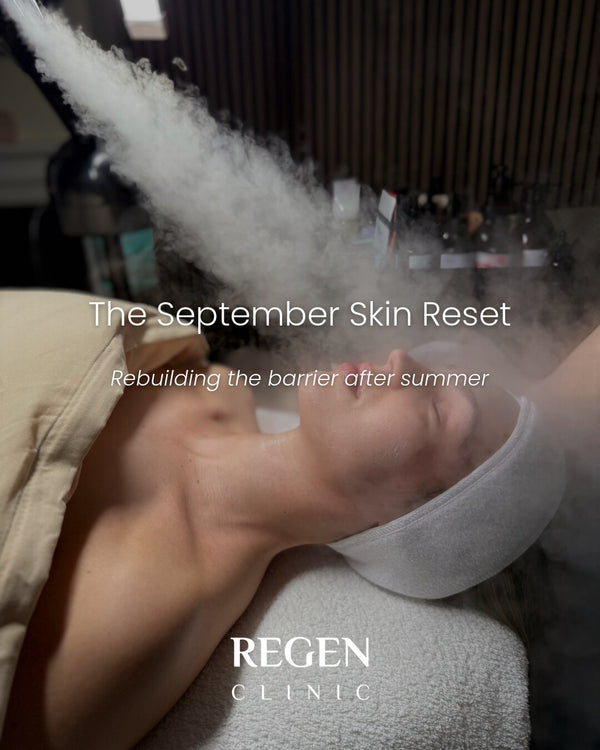
If you are rebuilding after summer, our earlier piece on the September skin reset is the natural companion to this one.
Common questions
Why is my skin so dry in winter even though I use a moisturiser?
Because a moisturiser can only help if the barrier underneath it is working, and winter heat and cold reduce its ability to hold water. Reducing exfoliation, using lukewarm water and choosing a barrier-supporting moisturiser with ceramides usually makes more difference than adding a richer cream on top of the same routine.
Should I stop using retinol in winter?
No. Winter is a good time to use a retinoid, because lower sun exposure makes it easier to protect the skin. If you become sensitive or flaky, the answer is usually to adjust the routine around it, with a gentler cleanser, a barrier-supporting moisturiser and buffering, rather than to stop. If your skin is stinging, peeling or burning persistently, seek advice.
Do I still need sunscreen in winter?
Yes. Ultraviolet light is present all year, and daily protection is the most effective habit for long-term skin health. Choose a broad-spectrum product you will wear every morning.
Is it normal for my skin to look duller in winter?
Yes, to a degree. Dry skin scatters light unevenly and cell turnover can slow in the cold, so it looks flatter. Gentle barrier repair often restores clarity within a few weeks, though individual results vary.
Can facials and peels still be done in winter?
Often yes, but the choice needs to match the skin's current state. Active peels are usually paused if the barrier is compromised, and a hydrating or soothing treatment may be more appropriate. This is best decided at assessment rather than booked blind.
When should I see a doctor about dry skin?
If the skin is cracked, weeping, very itchy, painful or spreading, or if it does not improve with simple measures after a couple of weeks. Seek medical advice promptly if you see signs of infection such as increasing redness, swelling, heat or pus.
If your skin has turned tight, sensitive or dull since the heating went on, the most useful step is a proper assessment. A Reveal Consultation, in Norwich or London, is where I look at the skin you have now, adjust your routine for the season and tell you plainly what to leave alone.
For independent patient information, see the NHS guidance on emollients.
Dr Chris Founder and Medical Director, REGEN Clinic
This article is general information and not individual medical advice. Suitability for any treatment depends on your medical history and an in-person assessment. Individual results vary.
Read further, or actually do something about it.
If anything in this piece sounds like your skin, the next step is a Reveal Consultation. A 60-minute doctor-led skin assessment, a documented plan, and where appropriate the first treatment in the same visit.