Treatments
The Japanese ritual that became a clinical tool — the cultural roots of Head Spa
Long before scalp health became a wellness trend, it was a ritual. Dr Chris on the cultural roots of Japanese Head Spa — why it works clinically, why it works psychologically, and why we treat it...

In this article
Long before scalp health became a wellness trend, it was a ritual. The Japanese tradition of treating the head and scalp as the seat of stress, fatigue and energy — and offering treatments designed to release all three — predates almost every modern clinical scalp protocol by centuries. What's now marketed as Japanese Head Spa is a careful translation of that tradition into a treatment room.
This is its history, and the reason we take it seriously enough to make it one of the cornerstone offerings at REGEN Norwich.
Where it comes from
The lineage of head and scalp treatment in Japan runs through several traditions: shiatsu (the broader practice of pressure-point manual therapy), kobido (a centuries-old facial massage tradition originally used by the imperial court), and the bath-house culture of the sentō and onsen — public and natural hot springs where ritualised washing and treatment were a part of daily life rather than an indulgence.
Within that broader culture, the head and scalp held particular significance. In traditional Japanese thinking, tension accumulates upward through the body and settles around the temples, the base of the skull, and the scalp itself. The head was treated as the place where mental load became physical — and where dedicated treatment could release what conversation alone could not.
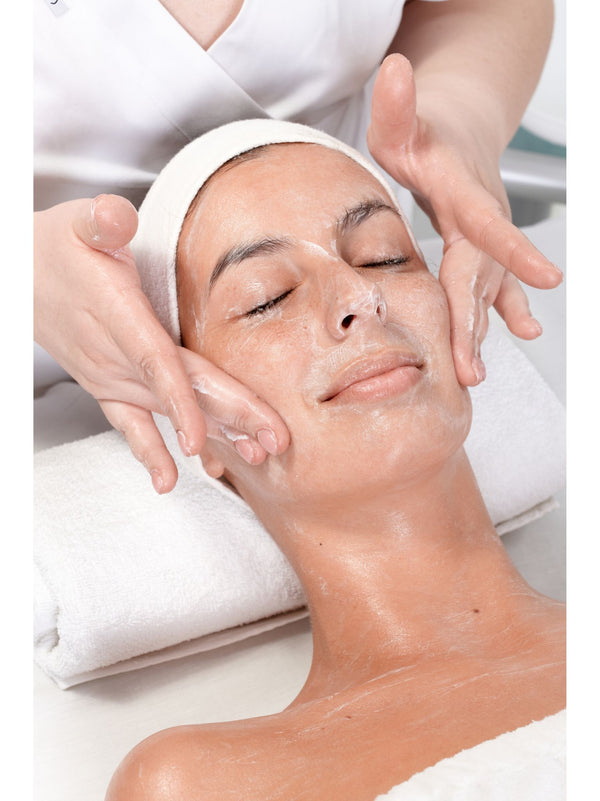
What developed over generations was a comprehensive practice: cleansing of the scalp using natural materials, massage of specific pressure points, manipulation of the muscle bands above the ears and at the back of the head, and the use of warmth, water and oils as both therapeutic tools and sensory cues. The treatment took time. It was unhurried. It was as much about restoration as it was about hygiene.
How it became a clinical category
In the last decade, the West has discovered what Japan never forgot. Scalp health affects hair health. The state of the muscle and fascia above the cervical spine affects facial appearance, mood and even sleep. The vagus nerve runs through the neck; gentle, sustained manual pressure to the scalp and the suboccipital region triggers parasympathetic activation in ways that can be measured.
What the Japanese tradition codified through experience, the literature has begun to support through measurement. Studies on scalp massage have shown improvements in hair density, hair growth rate, and patient-reported wellbeing. Studies on parasympathetic activation through scalp and neck work have shown reductions in cortisol and improvements in sleep quality. Studies on scalp microcirculation have shown sustained improvement after structured treatment courses.
Modern Japanese Head Spa — including the version we deliver at REGEN — combines this lineage with contemporary clinical thinking: medical-grade scalp products, calibrated water temperatures, structured protocols of varying duration, and integration with the broader skin and hair work the clinic does.
Why we take it seriously
A lot of UK clinics treat Japanese Head Spa as a curiosity, an add-on, a sensory novelty for a Saturday afternoon. We don't.
For Norwich specifically, the Japanese Head Spa is one of the strongest things we offer. It bridges the gap between clinical aesthetics and meaningful wellness work in a way that almost nothing else does. It supports scalp health in a city where good clinical scalp care is genuinely scarce. It introduces clients to the clinic in a way that's calm and welcoming, rather than transactional. And in a country that runs on overstimulation, it offers something genuinely restorative.
That seriousness shows up in how we deliver it. Our protocols are graded by duration — 45 minutes, 60 minutes, 90 minutes, 120 minutes — with each tier adding specific components: scalp cleanse and exfoliation; head and scalp massage; the water halo experience; oil scalp massage; facial cleanse and mask; deep scalp conditioning; gua sha; bespoke jelly mask; ice globe therapy. The longer protocols are not just "more of the same" — they're built around the recognition that the body responds differently to extended sensory work than to a brisk treatment.
Where it fits in the REGEN Method
Japanese Head Spa lives squarely in the Nurture pillar of the REGEN Method. It supports long-term skin and scalp health, it encourages the rhythm of regular care that produces lasting results, and it reframes treatment as ongoing partnership rather than transaction. For many of our Norwich clients, it's how they first arrive — and from there, the wider conversation about skin, scalp, hair and wellbeing follows.
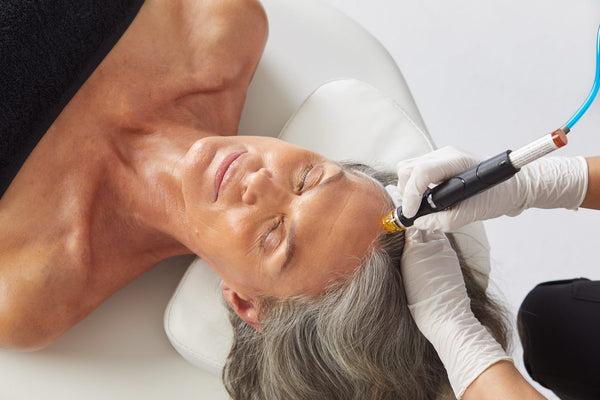
For clients addressing more clinical concerns, Head Spa pairs naturally with HydraFacial Keravive (machine-led scalp work) and PRP for hair (regenerative scalp work). The three together — Nurture, Generate, and Generate — are an unusually comprehensive response to scalp and hair concerns at any clinical level.
The honest closing
If you've thought of Japanese Head Spa as a wellness treat rather than a clinical category, that's understandable — but it sells the practice short. What we deliver in our Norwich treatment rooms is a centuries-old tradition translated carefully into a contemporary clinical setting. It is restful. It is restorative. And it produces measurable change in scalp health, mental state, and the felt sense of being well-cared-for.
If you'd like to understand whether it earns a place in your wider skin and wellness plan, that conversation belongs in a Reveal Consultation.
— Dr Chris, Founder and Medical Director, REGEN Clinic
Want the full detail on durations, inclusions and pricing? Visit the Japanese Head Spa treatment page.
Read further, or actually do something about it.
If anything in this piece sounds like your skin, the next step is a Reveal Consultation. A 60-minute doctor-led skin assessment, a documented plan, and where appropriate the first treatment in the same visit.